
Our History
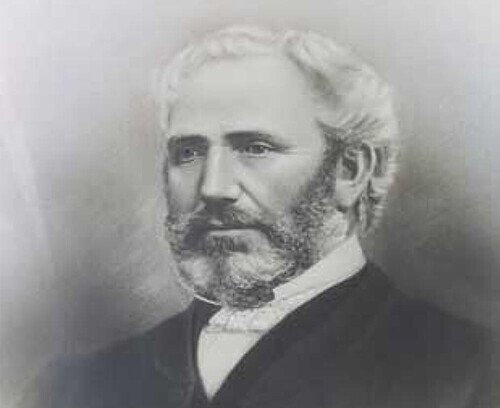
The McLean Institute was established pursuant to the Will of Allan McLean, who passed away in 1907. His intention was clear: to create a charitable institution that would support women of refinement or education who had fallen into reduced or straitened circumstances.
In 1909, the Institute was incorporated as a corporate body under the McLean Institute Act. This Act gave legal effect to the charitable trust set out in Allan McLean’s Will.
For over 115 years, the Institute has worked to realise that vision by applying its assets for the benefit of women in need.
Evolving with Changing Times
With the passing of time, the original terms of the Will have become difficult to apply in modern circumstances.
Social needs have evolved, and the language of the early twentieth century no longer fully reflects the realities faced by women today.
The Board of Trustees is committed to ensuring that the Institute’s assets continue to provide meaningful public benefit, while remaining faithful to the spirit of Allan McLean’s original intention.
To achieve this, the Trustees have pursued a private Act of Parliament to modernise and vary the terms of the trust. The updated framework enables the Institute to respond more effectively to contemporary challenges.
Our Purpose Today
Under the updated framework, the purpose of the Institute is:
To provide assistance to and promote the welfare and well being of disadvantaged women residing in the Region, and the children in their care, who are in need of support due to poverty, ill health, violence, disability, trauma, addiction, homelessness, or other circumstances.
The Institute may fulfil this purpose by:
- Providing, or facilitating the provision of temporary / emergency / transitory housing for women and their children who are in need of such housing;
- Assisting women with housing needs to locate, obtain, and/or retain suitable housing within their financial means;
- Providing accommodation at an affordable cost for women who require assistance to locate, obtain and/or retain suitable housing within their financial means;
- Providing accommodation and other support for young women transitioning out of Foster Care (and any children of such women);
- Providing support to women in distress due to mental health or addiction issues, disability, trauma, violence, homelessness, poverty, or dislocation;
- Providing support for women suffering from terminal illnesses or long-term/permanent disablement.
Funding or providing other support for the provision of programmes, projects and other initiatives that:
- Promote and support the empowerment of women, including enabling them to live independently;
- Support women to fully participate within the contexts of family, whanau and community;
- Promote public awareness of the problems of family violence and abuse;
- Work to change social norms that support violence against women;
- Promote and provide parenting support services;
- Promote motherhood as a valuable and positive force in our society;
- Working with and assisting other charities that are focussed on providing benefit to women (and their children) and that otherwise have charitable purposes similar to those of the Institute;
- All other acts or things which are charitable under the laws of New Zealand and which involve the care, support and protection of women and children;
- Doing all such other acts and things as are incidental or conducive to the attainment of the above objects.
- In providing (or facilitating the provision of) any form of accommodation to any person pursuant to clauses 5.1 and 5.2, the Institute may apply its assets in the provision of accommodation outside of the Region (or the facilitation thereof), where:
- the person receiving the benefit of the accommodation was previously residing in the Region; and
- it is considered reasonable to provide accommodation outside of the Region to best support that person in escaping family violence or otherwise transitioning or recovering from their disadvantaged circumstances.
The core principle remains unchanged
To apply the Institute’s resources responsibly for the care, support, and protection of women and children.